16 Gigawatts Without Reinventing the Wheel
Nuclear power rarely dominates headlines—yet it remains one of the few proven, large-scale sources of reliable, carbon-free electricity. As the graphic shows, the most realistic nuclear gains over the next decade won’t come from speculative breakthroughs or moonshot technologies. They will come from using what we already have—better and smarter.
The fastest nuclear capacity additions are hiding in plain sight. Reopening prematurely closed reactors, completing long-delayed construction projects, improving performance at existing plants, extending operating licenses, and deploying a limited number of small modular reactors (SMRs) at already permitted sites could together deliver up to 16 gigawatts of new capacity within ten years.
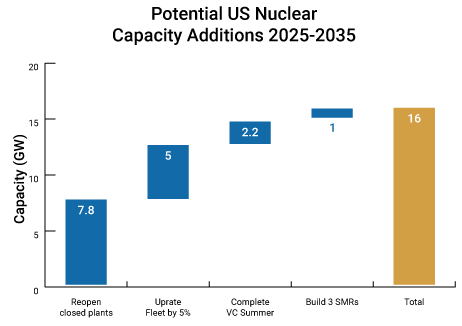
That’s not a theoretical number. It reflects practical, incremental steps that avoid the biggest political and permitting obstacles facing new greenfield nuclear projects. In an era when electricity demand is surging—driven by AI, data centers, electrification, and reshoring—these “no-regret” nuclear moves may be among the most valuable tools we have.
Yet even these seemingly straightforward actions face regulatory friction, financing challenges, public opposition, and institutional inertia. The question isn’t whether the electrons are needed—it’s whether the system can move fast enough to deliver them.
Want the full picture?
This nuclear scenario is just one piece of a much larger story explored in my forthcoming book,
Power Plays: How the Battle for Electrons Will Define the 21st Century.
I’ve made a free Executive Summary Preview available, where I explain:
-
why electricity demand is accelerating faster than most forecasts
-
what realistic supply options actually exist
-
how policy, markets, and permitting shape outcomes
-
which “no-regret” strategies can stabilize the grid now
👉 Download the Executive Summary preview here
(Early access—before the book is published.)